Carpet Types for Every Room in Your Home
Compare carpet types for bedrooms, living rooms, stairs and hallways. Get practical help choosing a cosy, hard-wearing carpet at home in Norfolk today.
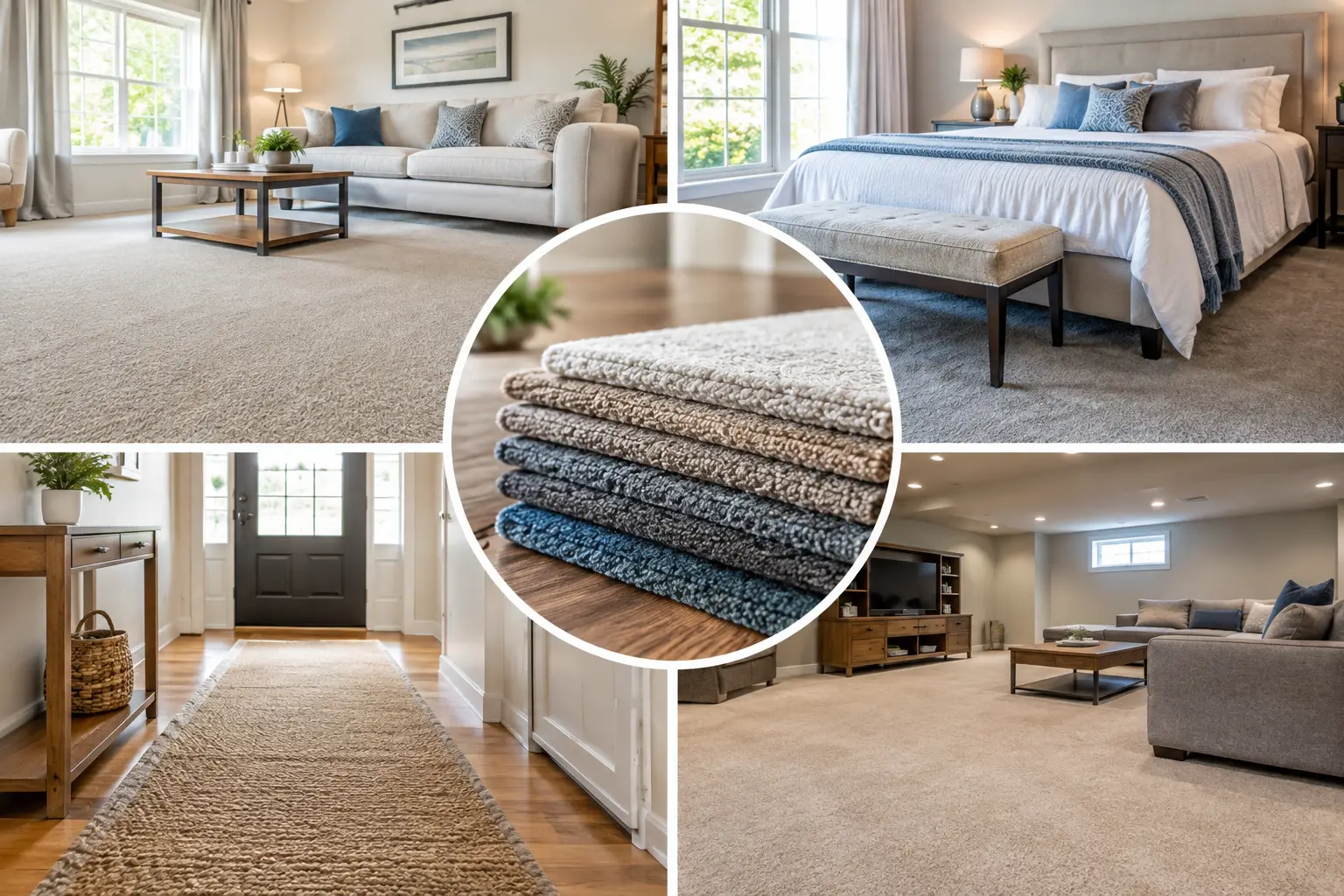
The carpet that feels beautifully soft underfoot in a quiet bedroom may not be the best choice for a busy hallway, muddy paws or a staircase used all day. With so many carpet types available, the simplest way to choose well is to start with how your room is actually lived in - not just how a small sample looks in a showroom.
At Cosy Carpets & Flooring, we bring samples to your home so you can see the colour, texture and finish beside your sofa, paintwork and natural light. It takes the guesswork out of a decision that should feel exciting, not stressful.
The main carpet types to know
Most home carpets fall into a few key styles. Each has a different look, feel and level of practicality, so there is no single “best” carpet. The right one depends on the room, your household and the finish you want to come home to.
Saxony carpet: soft and luxurious
Saxony is the carpet many people picture when they imagine a plush, cosy bedroom. Its fibres are cut and twisted, creating a soft surface with a slightly velvety appearance. It feels lovely under bare feet and adds instant warmth to bedrooms, dressing rooms and low-traffic lounges.
The trade-off is that Saxony can show footprints, vacuum tracks and shading more readily than tighter styles. This is part of its character, rather than a fault, but it is worth seeing a sample in your own room before deciding. A denser, good-quality Saxony can work well in a living room, particularly for households that want comfort first.
Twist carpet: the practical all-rounder
Twist carpet has tightly twisted cut fibres that give it a neat, textured finish. It is one of the most versatile choices for family homes because it is hard-wearing, easy to live with and less likely to show marks from everyday foot traffic than a smooth, plush pile.
This makes it a strong option for living rooms, stairs, landings, hallways and children’s bedrooms. Twists come in a huge range of colours, from warm neutrals to deeper tones that are more forgiving in busy spaces. If you want one carpet style to run through several rooms, a quality twist is often a very sensible place to start.
Loop pile carpet: texture with a tailored look
Loop pile carpets are made with uncut loops of yarn, giving them a distinctive textured surface. They can feel relaxed and natural, or smart and structured, depending on the size and pattern of the loop. Berber-style carpets are a familiar example, often with flecks of colour that help disguise day-to-day dust and the occasional mark.
A loop pile is well suited to lounges, home offices and less formal areas where you want texture without a deep pile. It can be durable, but it is not always the right choice for homes with pets whose claws may catch on the loops. It is also wise to consider whether anyone in the household wears sharp heels regularly. These are small practical details that make a big difference over time.
Natural fibre carpet: character and texture
Natural carpets, such as wool, sisal and seagrass styles, bring depth and character to a room. Wool is naturally warm, resilient and comfortable, making it a premium choice for bedrooms, lounges and stairs. It has a lovely natural finish and can perform brilliantly when looked after correctly.
Sisal and similar woven natural options have a more textured, earthy appearance. They suit interiors where you want a calm, organic feel, but they are generally less forgiving of spills and moisture. They are usually better kept away from kitchens, bathrooms and areas where wet shoes are common. A home consultation is especially useful here, as light levels and your existing décor can completely change how a natural texture reads in the room.
Choosing carpet types by room
A good carpet choice should work with the demands of the space as well as the style of your home. Think about who uses the room, how often they use it and what you would rather not have to worry about every day.
Bedrooms
Bedrooms are where softness can take centre stage. Saxony is a popular choice for a hotel-like feel, while a softer twist offers comfort with a little more everyday resilience. Pale shades can make a smaller bedroom feel airy, but mid-tones and flecked finishes can be easier to maintain in family rooms or children’s bedrooms.
Living rooms
For a living room, you have more freedom to balance comfort and durability. A dense Saxony creates a cosy finish for relaxed evenings, while a twist is ideal if the room is the centre of family life. Consider the direction of natural light too. A shade that looks warm and neutral in a sample book can look cooler beside a north-facing window.
Stairs, landings and hallways
These are the hardworking areas of the house, so a durable twist is often the go-to choice. It handles regular footfall well and keeps its appearance better than softer, looser piles. Patterned or flecked carpets are particularly practical here, helping to disguise everyday wear between cleans.
Stairs also need careful fitting. The carpet must sit neatly around each step, and the underlay matters just as much as the carpet itself. Good underlay improves comfort, helps the carpet wear well and gives a more secure, substantial feel underfoot.
Dining rooms and home offices
A low-profile twist or loop pile can work well in rooms with dining chairs or desk chairs, as it is less likely to flatten quickly. If chairs are moved frequently, ask about pile density and suitability before choosing. The most luxurious option is not always the most practical one for the job.
Colour, pile and underlay: the details that matter
Colour is often the first thing people notice, but pile weight, density and underlay have a big impact on how a carpet performs. A heavier carpet is not automatically better. What matters is choosing a well-made option suited to the room and fitting it properly.
For busy homes, mid-tone colours, subtle patterns and heathered finishes tend to be more forgiving than very pale plain carpets. That does not mean you have to avoid light shades. A soft neutral can look fantastic in the right room, especially where traffic is lower. It simply helps to make the choice with open eyes.
Underlay is worth treating as part of the flooring, not an afterthought. The right underlay can make a carpet feel softer, reduce sound between floors, improve insulation and support its lifespan. If you are replacing existing carpet, it is a good moment to assess whether the old underlay is still doing its job.
See the difference in your own home
Choosing between carpet types becomes much easier when you can compare samples where they will actually be fitted. Hold them against your curtains, look at them in daylight and evening light, and see whether the texture suits the proportions of the room. A large, bright lounge can carry a deeper pile and richer shade differently from a compact hallway.
That is why an in-home measuring and sample visit is so useful. You receive practical advice, accurate measurements and a clear quotation without making separate trips or trying to remember what a sample looked like under different lighting. From affordable carpets starting at £9.99 per square metre to more luxurious finishes, there is usually a comfortable option for both your home and your budget.
The best carpet is the one that suits your everyday life, feels right when you step into the room and is fitted properly to last. Start with the room you use most, see a few samples in place, and let your home make the choice clearer.