Durable Hallway Flooring for Busy Norfolk Homes
Choose durable hallway flooring that handles muddy shoes, pets and daily footfall, while looking right at home. See vinyl, LVT and carpet options too.
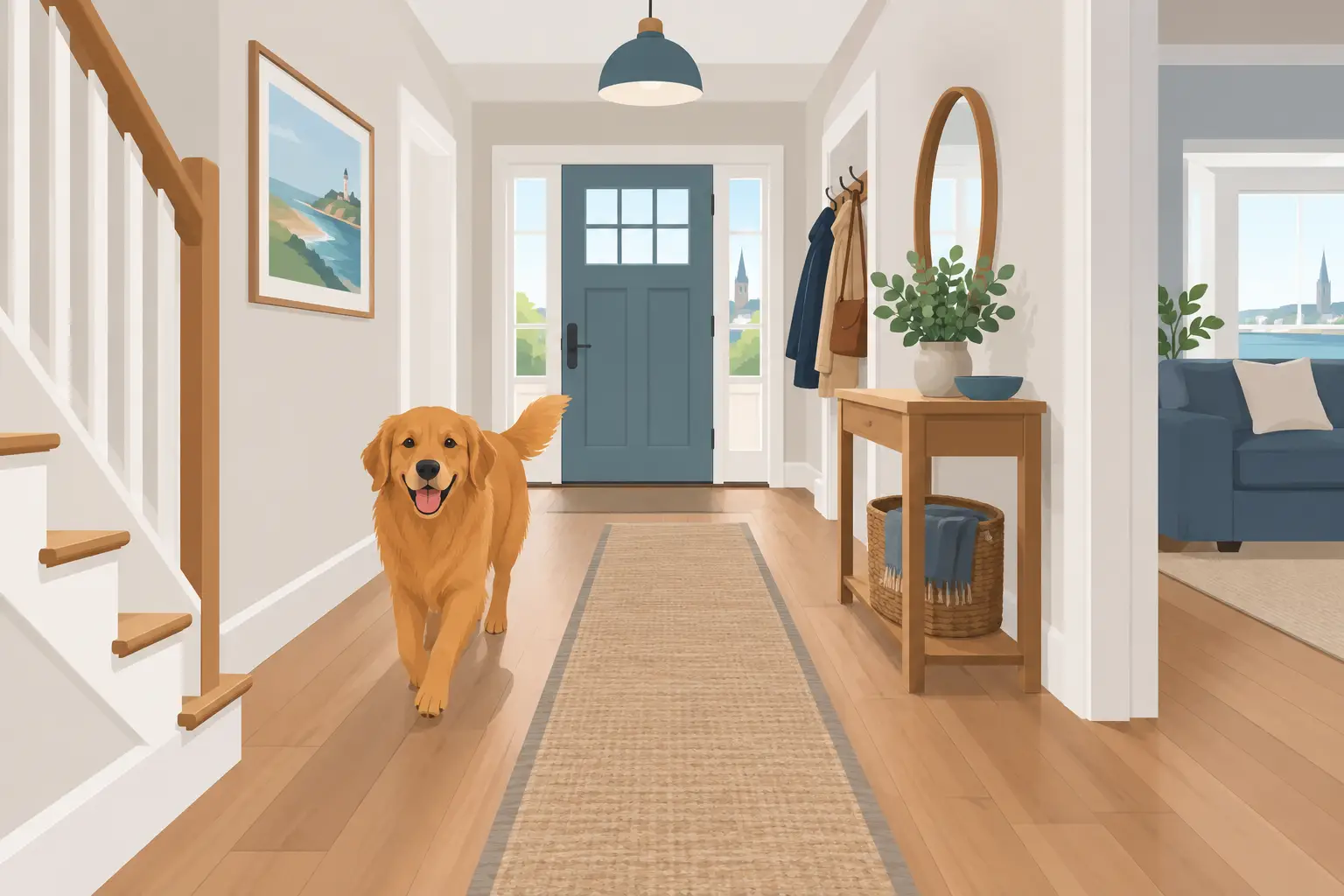
The hallway works harder than almost any other part of the home. It takes wet shoes, school bags, pet paws, shopping deliveries and the constant back-and-forth of everyday family life. That is why durable hallway flooring needs to do more than look good on the day it is fitted. It needs to keep its cool when life gets a little messy.
The right choice depends on how your household uses the space, how much natural light it gets and what sits either side of the front door. A busy family entrance may need a different finish from a quiet hallway in a period cottage. The good news is that practical does not have to mean plain.
What makes hallway flooring durable?
Durability is not just about choosing the toughest material on paper. A good hallway floor should cope with regular footfall, be easy to clean and suit the way people move through your home. It should also feel right underfoot and work with the look of adjoining rooms.
For many Norfolk homes, moisture and grit are the main challenges. Rainy walks, sandy shoes after a day on the coast and muddy garden trips can all wear away at a floor over time. A surface that wipes clean easily will make a real difference to your weekly routine.
The finish matters too. Very pale flooring can look fresh and spacious, but it may show marks sooner in a well-used entrance. Deep colours can be forgiving, though they can make a narrow hall feel darker. Mid-tones, gentle patterns and natural wood or stone effects often strike a useful balance between style and everyday practicality.
Durable hallway flooring options that work hard
Vinyl flooring for easy everyday care
Sheet vinyl remains a popular choice for hallways because it is comfortable, water-resistant and straightforward to maintain. It can recreate the look of timber, tile or stone without the cold feel of some hard surfaces. For households that want a smart finish on a sensible budget, it offers plenty of choice.
Vinyl is particularly useful where wet footwear is a regular part of the day. A quick sweep followed by a damp mop is usually all it takes to keep it looking tidy. Choosing a quality vinyl and having it fitted properly is key, especially around doorways and joins where movement and moisture can cause trouble if corners are cut.
A realistic wood-effect vinyl can soften a modern entrance, while a stone-effect design can give a more traditional property a clean, practical base. Patterned styles also deserve a look if you want to make a compact hallway feel more considered without adding clutter.
LVT for a long-lasting, polished finish
Luxury vinyl tile, often known as LVT, is a strong contender when you want a durable hallway floor with a more individual look. Available in plank and tile formats, it brings convincing wood and stone effects together with excellent day-to-day practicality.
LVT is designed to stand up well to busy homes, and its protective top layer helps it cope with scuffs and regular use. It is also warmer and quieter underfoot than natural stone or ceramic tile, which can make the first few steps into the house feel far more welcoming.
The trade-off is price. LVT is usually a bigger investment than standard vinyl, but it can be worth it for an entrance that sees plenty of action and needs to look good for years. The preparation underneath matters greatly too. A smooth, sound subfloor gives the finished floor the best chance of performing as it should.
Wood-effect LVT works beautifully when you want the hallway to flow into a living area, while slate and stone effects suit kitchens, utility spaces and older homes. Seeing samples next to your paintwork, furniture and front-door colour is often the easiest way to decide.
Carpet for warmth, with the right expectations
Carpet can still be a sensible hallway choice, particularly in an upstairs hall or a lower-traffic entrance where warmth and softness are the priority. It absorbs sound, feels cosy underfoot and can make a long corridor feel less echoey.
For a front hallway, choose carefully. A textured twist or loop pile in a flecked, mid-tone shade is generally more forgiving than a very light, smooth pile. The flecks help disguise the odd bit of tracked-in dirt between cleans, while a denser construction is better placed to cope with footfall.
Carpet is not the best answer for every home. If children, dogs or outdoor hobbies mean frequent wet and muddy footwear, vinyl or LVT may remove a lot of cleaning stress. But where the entrance is sheltered and shoes are usually taken off quickly, carpet can bring a welcoming, softer finish that hard flooring simply cannot match.
Match the flooring to your real routine
It is easy to choose from a small sample in a showroom and only later realise it does not suit your household. Think about the last week instead. Did people come in dripping after a walk? Does the hallway lead straight to the kitchen? Is it a narrow space with little daylight, or a wide entrance that sets the tone for the whole home?
A practical choice starts with honest answers. If the hall is the route for bikes, boots and a lively dog, prioritise wipe-clean surfaces and a forgiving pattern. If it is a calm connecting space between bedrooms, comfort and noise reduction may matter more. Landlords may favour a hardwearing, easy-care floor that suits a range of tenants, while homeowners renovating for the long term might choose LVT for its finish and staying power.
Colour deserves a little thought as well. Grey remains popular, but warm oak tones, soft taupes and natural stone shades can create a more relaxed welcome. In a darker hallway, avoid choosing purely by a tiny swatch. What looks pale under shop lighting may look quite different beside your own walls and windows.
Do not overlook fitting and preparation
Even the best flooring can disappoint when the surface beneath it has not been prepared correctly. Hallways often have uneven subfloors, old adhesive, thresholds to work around or doors that need checking for clearance. These details are not glamorous, but they matter.
Professional fitting helps ensure that vinyl sits smoothly, LVT lines up neatly and carpet is stretched securely. It also gives you a chance to plan transitions into neighbouring rooms, rather than ending up with an awkward change of level or a finish that does not quite meet the doorway properly.
At Cosy Carpets & Flooring, samples can be brought to your home so you can compare them where they will actually live. It is a simple way to see how a wood-effect plank looks in your hallway light, how a stone-style vinyl works with your décor and whether a carpet colour feels as cosy as you hoped.
A few care habits that make a difference
Durable flooring still benefits from regular care. Sweep or vacuum grit away often, as tiny particles can act like sandpaper over time. Wipe up water promptly, particularly around the entrance, and use cleaning products recommended for your chosen floor rather than whatever happens to be under the sink.
For vinyl and LVT, a gentle cleaner and a damp, not soaking, mop are usually enough. For carpet, regular vacuuming and quick attention to fresh marks will help preserve the pile. Avoid dragging heavy furniture across any floor where possible, and use suitable protection when moving large items through the hall.
Choose it where you will live with it
A hallway floor has to earn its place every single day, so do not rush the decision based on a picture alone. Bring the samples into the space, look at them in morning and evening light, and picture the busy moments as well as the tidy ones. The best durable hallway flooring is the option that makes coming home feel easier, whatever the weather has brought through the door.