Flooring Compatible with Underfloor Heating
Choosing flooring compatible with underfloor heating? Compare LVT, vinyl, carpet and more, with practical advice for a warmer, comfortable Norfolk home.
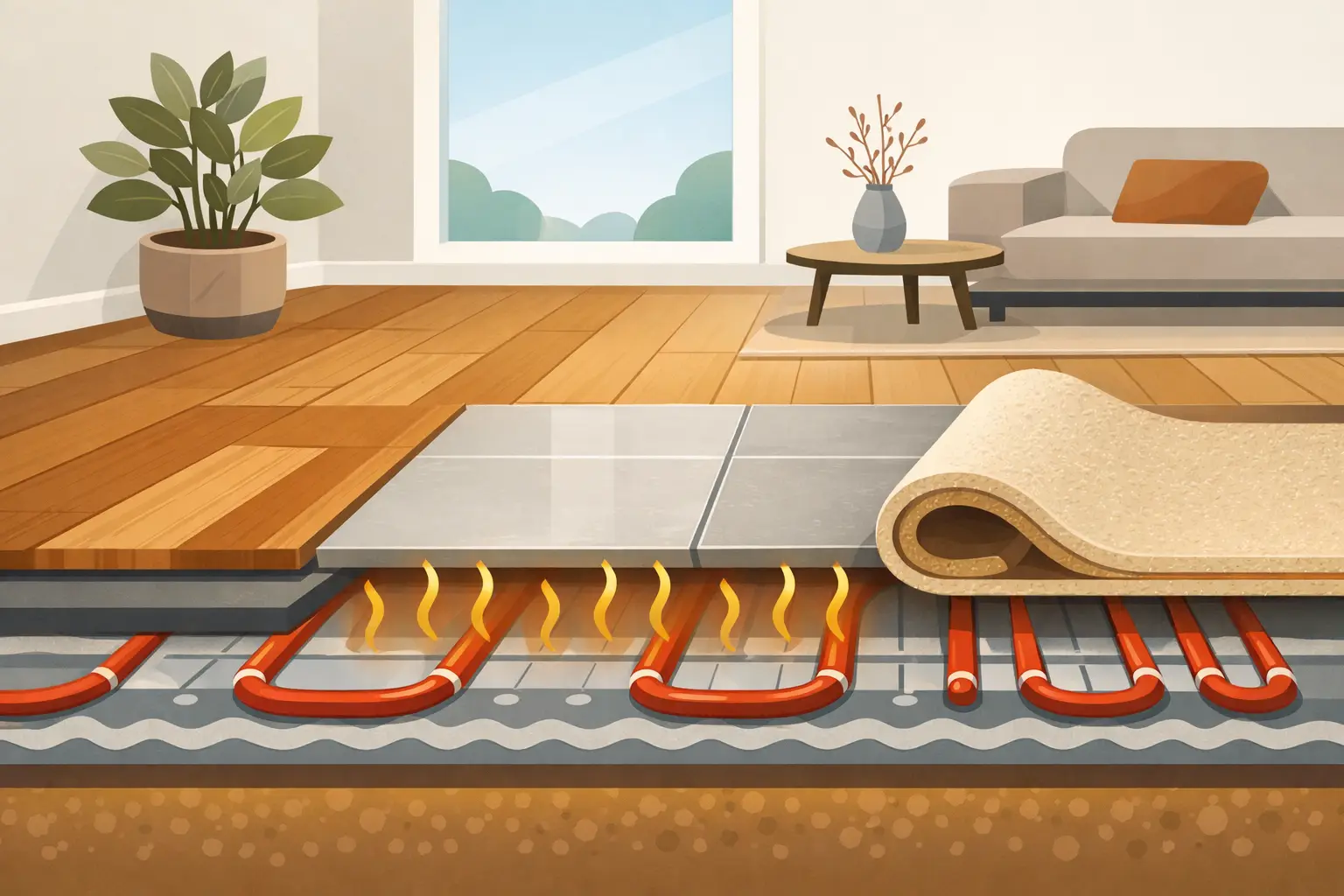
A warm floor makes a real difference on a chilly Norfolk morning, but the finish you choose determines how quickly that warmth reaches the room. Flooring compatible with underfloor heating needs to let heat travel through efficiently while still coping with daily life, from muddy hallway shoes to busy family kitchens.
The good news is that you are not limited to one look. Luxury vinyl tile, sheet vinyl, selected carpets and certain wood floors can all work beautifully with underfloor heating. The right choice comes down to the room, the heating system, the feel you want underfoot and the product’s own installation guidance.
Which flooring is compatible with underfloor heating?
LVT and vinyl are often the easiest starting point. They are slim, practical surfaces that allow heat to pass through well, and they offer a huge choice of wood-effect and stone-effect designs. For kitchens, hallways and open-plan spaces, they provide that clean, modern look without the maintenance demands of a natural material.
Carpet can work too, which surprises plenty of homeowners. The key is choosing a suitable carpet and underlay combination with a low enough thermal resistance. In simple terms, very thick flooring and a heavy underlay can hold the warmth back; a more appropriate combination allows the heating to do its job while keeping bedrooms and lounges feeling properly cosy.
Engineered wood may also be suitable, provided it is specifically approved for underfloor heating. Unlike solid timber, engineered boards are constructed to be more stable when temperatures change. Even then, every product has its own limits, so it is worth checking rather than assuming that any wood-look floor will do.
Ceramic and porcelain tiles are excellent conductors of heat, but they are not the only practical option. For many homes, LVT or vinyl gives a warmer-looking finish, softer feel and a more straightforward route to a stylish, heat-friendly floor.
LVT: a strong all-round choice
Luxury vinyl tile is one of the most popular options for flooring compatible with underfloor heating, and it is easy to see why. It is stable, thin enough to transfer heat effectively and available in designs that convincingly recreate planks, herringbone, stone and slate.
It suits spaces where you want one continuous look, such as a kitchen flowing into a dining area or hallway. It also stands up well to the spills, splashes and everyday traffic that make some natural materials less relaxing to live with.
The important detail is preparation. LVT needs a sound, smooth subfloor, and an experienced fitter will assess whether any levelling work is needed before installation. A beautifully chosen floor can still disappoint if it is laid over an uneven base. Getting that part right helps the finish look better and perform as it should for years.
Vinyl: practical warmth for kitchens and bathrooms
Sheet vinyl is a sensible, budget-friendly choice for rooms that need an easy-clean surface. Modern vinyl is a long way from the plain designs many people remember. There are realistic wood, tile and stone effects, including styles that bring character to smaller kitchens, utility rooms and bathrooms without making them feel busy.
Because vinyl is generally thin, it works well with underfloor heating when the specific product is approved for it. It is also comfortable underfoot, an appealing balance when you want a practical floor that does not feel hard or cold.
For landlords refreshing a property, vinyl can be especially useful. It delivers a neat finish, is simple to maintain and offers plenty of choice at an accessible price point. As always, the room’s moisture levels and subfloor condition need to be considered before selecting a design.
Can you have carpet with underfloor heating?
Yes, provided the overall tog rating is suitable. Tog is a measure of thermal resistance: the higher the number, the more a material slows heat down. Your carpet and underlay need to be considered together, not as separate decisions.
This does not mean your lounge or bedroom has to feel less inviting. A well-chosen twist or Saxony carpet can still provide softness and comfort, while a compatible underlay helps heat rise into the room rather than getting trapped below. Loop and natural-fibre styles need a little more product-specific consideration, as their construction and backing vary.
The system manufacturer will usually state a maximum combined tog value. Follow that guidance, rather than relying on a general rule of thumb. It protects the efficiency of the heating and helps prevent a room taking longer than expected to reach temperature.
Wood flooring needs a closer look
Wood brings warmth and character, but it is the category where a little care saves a lot of trouble. Timber naturally responds to changes in temperature and humidity. If it is heated too quickly or taken beyond the manufacturer’s limits, it can move, shrink or develop gaps.
Engineered wood is normally the more reliable choice over underfloor heating, but suitability depends on the board, thickness, fitting method and system below it. Solid wood is often less suitable. If you love the appearance of timber but want fewer variables, wood-effect LVT can be a very convincing alternative.
Whichever route you take, use the floor heating gradually. Most manufacturers advise bringing the temperature up in stages, particularly after installation. The floor surface should typically remain at or below 27°C, but always follow the instructions for your heating system and chosen flooring.
The details that make the biggest difference
Underfloor heating is only as effective as the whole floor build-up allows it to be. Before choosing a finish, consider what sits underneath it: insulation, screed or subfloor, levelling compound, adhesive and underlay can all affect performance.
Electric and water-based systems have different installation requirements, but the flooring decision follows the same principle. Choose a product approved for the system, avoid insulating layers that are too thick and make sure the subfloor is dry, level and ready for fitting.
New screeds, in particular, need time to dry and be properly commissioned before flooring goes down. Rushing this stage can lead to moisture problems later. A professional fitting plan should account for the product, the room and the condition of the subfloor, not simply the colour you liked on first viewing.
It is also wise to think room by room. A low-maintenance vinyl in the utility room, LVT in the kitchen and a compatible carpet in the bedroom can all sit alongside underfloor heating without every space needing the same finish. Matching the material to how you actually live is usually better than forcing one solution throughout the house.
See the samples where they will be fitted
Lighting can change a flooring colour dramatically. A pale oak-effect LVT might look fresh and airy in a showroom but take on a warmer tone beside your kitchen units, while a carpet that looks neutral under bright lights may reveal a different undertone in your bedroom.
That is why viewing physical samples in your own home is so useful. You can compare them against walls, furniture and natural light, while discussing which options are approved for your underfloor heating. It takes the guesswork out of a decision that needs to look right as well as work well.
Cosy Carpets & Flooring brings that choice to homes across Norfolk, with straightforward advice, measuring and professional fitting handled in one managed process. You can focus on the finish you want, knowing the practical checks are not being skipped.
A warm floor should make daily life feel easier, not leave you worrying about whether you chose the wrong material. Start with the room, check the manufacturer’s compatibility guidance, and choose a sample that feels right in the place you will enjoy it every day.