Carpet Fitting Versus DIY Installation Compared
Compare carpet fitting versus DIY installation, from real costs and tools to finish quality, timing and when professional fitting makes better sense too.
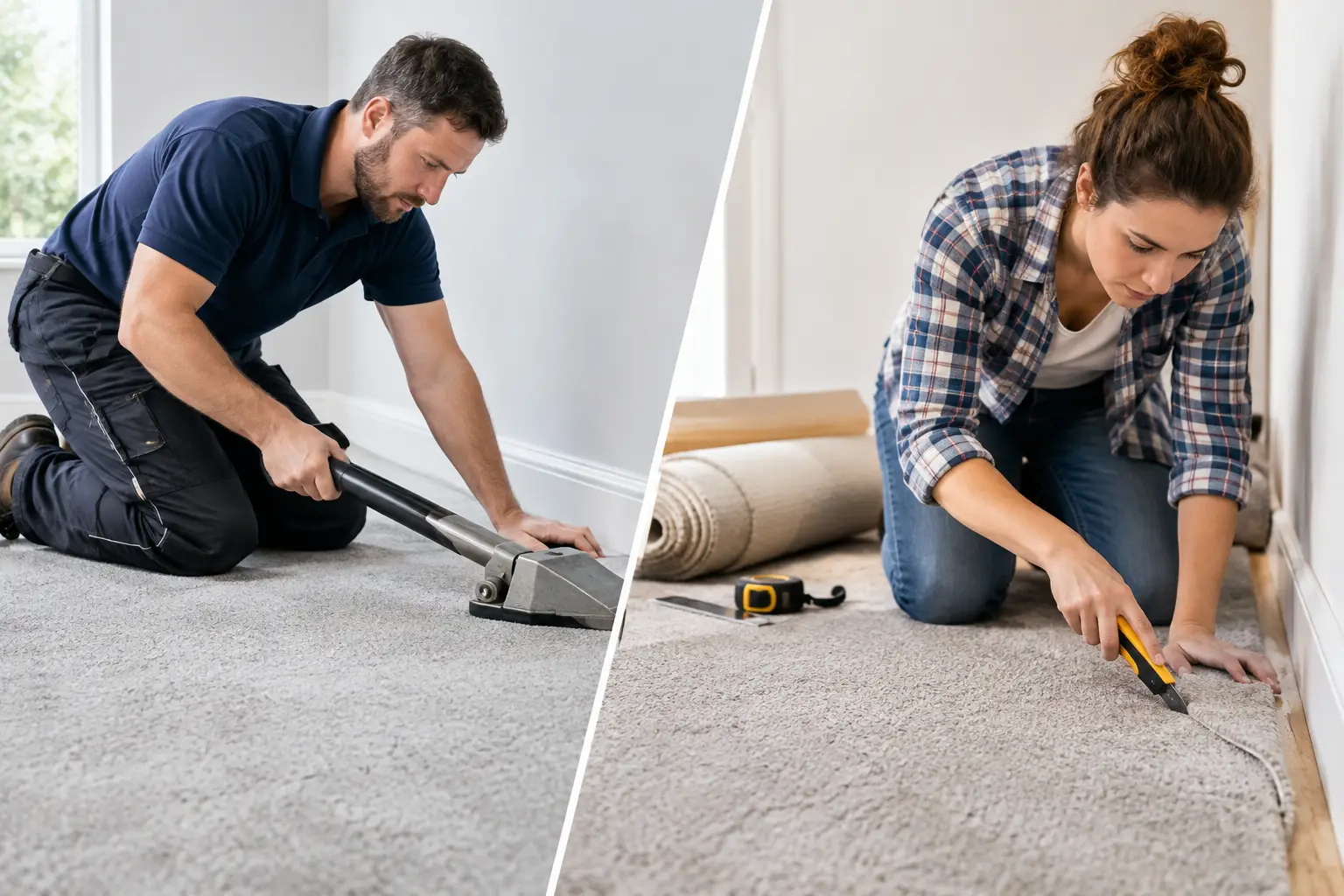
A new carpet can make a bedroom feel warmer, soften a busy living room and give a tired home an instant lift. But when you are comparing carpet fitting versus DIY installation, the price on the carpet itself is only part of the picture. The choice comes down to your room, your confidence, the tools you already own and how much you value a neat, long-lasting finish.
DIY can be a sensible route for a small, straightforward space if you are practical and prepared. Professional fitting is usually the calmer choice for larger rooms, stairs, patterned carpets or any job where getting it wrong would mean buying more material. Here is how to decide without the showroom stress.
What professional carpet fitting actually includes
Professional fitting is not simply laying a carpet down and trimming the edges. A good fitter assesses the room, checks the subfloor, plans the joins and works around doorways, alcoves, radiators and awkward corners. They make sure the carpet is stretched correctly, secured at the edges and finished cleanly at thresholds.
That stretching matters more than many homeowners realise. Carpet that has not been properly tensioned can develop ripples, loosen at the perimeter or wear unevenly over time. A professional fitter uses specialist equipment to pull the carpet into place and hold it securely, particularly in bigger rooms where a knee kicker alone is unlikely to give the best result.
There is also the practical side. Old flooring may need lifting, grippers may need replacing and door clearances may need checking before the new carpet goes down. When these details are managed as part of one service, you are less likely to be left with a last-minute surprise on fitting day.
Carpet fitting versus DIY installation: the real cost
DIY often looks cheaper because you are not paying a fitting charge. That can be true, but it is worth costing the entire job rather than comparing one line on a quote.
For a proper DIY installation, you may need underlay, gripper rods, threshold bars, adhesive or tape for joins, a sharp trimming knife, spare blades, a knee kicker, a carpet stretcher and a seam roller. Buying or hiring these tools can narrow the saving quickly. You will also need to allow for waste, especially where there are corners, bay windows, doorways or a directional pile to match.
Professional fitting has a clear upfront cost, but it brings the equipment, know-how and time together. It can also reduce the risk of ordering too little carpet or cutting into an expensive piece incorrectly. If a room needs a join, a fitter will position it thoughtfully rather than leaving it in the most visible walking route where possible.
For landlords refreshing a simple box room between tenancies, DIY may still be worthwhile if the room is genuinely uncomplicated and time is on your side. For a family home, where the carpet is expected to look good for years, the value of professional fitting is often in avoiding replacement costs later.
When DIY can work well
DIY carpet installation is most realistic in a small rectangular room with a sound, level floor and no difficult features. A spare room with one doorway is very different from a lounge with a bay window, fitted furniture and several access points.
It also helps if you have laid carpet before, or have someone experienced on hand. Watching a tutorial can explain the basic process, but it cannot replicate the feel of stretching carpet evenly or deciding how much material to leave before the final trim. Those are the moments where a small error can become obvious.
Choose DIY only if you are happy to measure carefully, work patiently and accept that the job may take most of a day. The carpet should be acclimatised according to the manufacturer’s guidance, the subfloor should be clean and dry, and the underlay needs to sit flat with neatly butted joins. Rushing the preparation is usually what lets a DIY finish down.
Where DIY becomes a false economy
Stairs are a classic example. They need accurate cuts, consistent tension and clean finishing around each tread and riser. A loose or poorly secured edge is not only untidy but can become a trip risk.
Patterned carpet is another job best left to a fitter. Even a subtle stripe or repeating design needs careful planning so that it runs straight and aligns at joins. Natural materials, thick pile carpets and larger open-plan spaces can be equally unforgiving because they demand more precise handling.
Then there are the hidden complications. Uneven floorboards, damaged subfloors, damp concerns or old adhesive residues should be dealt with before a new carpet is fitted. Covering over a problem may save time today, but it can affect comfort and durability from the first week.
If you are fitting carpet in a hallway that links several rooms, think about the direction of travel too. A professional can advise on pile direction, transitions and where joins will be least noticeable. These small decisions help the finished floor look considered rather than pieced together.
The finish you see every day
A carpet can be lovely in a sample and still disappoint if it is badly fitted. Edges that lift, untidy door bars, visible joins and bumpy underlay draw the eye every time you walk into the room. They can also make a good-quality carpet feel less comfortable underfoot.
Professional fitting is particularly useful when you have chosen a carpet for its appearance. Saxony styles need thoughtful handling to keep the pile looking even, while loop carpets need clean cuts to avoid snagging. With a twist carpet, correct stretching helps preserve the tidy, smooth look that made you choose it in the first place.
The same principle applies to value ranges. An affordable carpet, fitted properly, can look smart and serve a home well. Spending more on the carpet while cutting corners on installation does not always give the best overall result.
Time, disruption and peace of mind
DIY gives you control over timing, but it also puts every task on your list. You will need to move furniture, prepare the room, collect materials, fit the carpet and dispose of the waste. If something does not go to plan, the room may be out of action until you find a solution.
With a professional service, the process is more contained. Measurements are taken before ordering, so the quantity and fitting plan are based on the actual room rather than a hopeful estimate. On the day, experienced fitters can complete work efficiently and leave you with a space ready to enjoy.
For Norfolk households juggling work, school runs, renovations or a move, that time saving can be the deciding factor. Cosy Carpets & Flooring brings samples and measuring to your home, so you can see colours and textures alongside your own furniture and lighting before the fitting is arranged. It is a simpler way to make a confident choice.
A practical way to make the decision
Ask yourself three honest questions. Is the room simple enough to fit without joins or complex cuts? Do you have access to the right tools and the confidence to use them? And if the finish is not quite right, would you be comfortable living with it or paying to put it right?
If the answer to any of those questions is no, professional fitting is likely the better investment. You are paying for more than labour. You are paying for accurate measuring, proper preparation, specialist tools and a finish that helps your chosen carpet perform as it should.
If you do choose DIY, keep the project modest, measure twice and buy a little extra material for sensible cutting allowance. Do not be tempted to skip underlay or force a carpet into place with blunt tools. A careful installation is always better than a quick one.
Your home should feel cosy when the job is done, not like a weekend project that still needs fixing. Choose the route that gives you confidence every time you step into the room.