Choosing Stair Carpet for a Safer, Cosier Home
Our choosing stair carpet guide helps Norfolk homes balance comfort, safety and style, with practical advice on pile, colour, underlay and fitting choices.
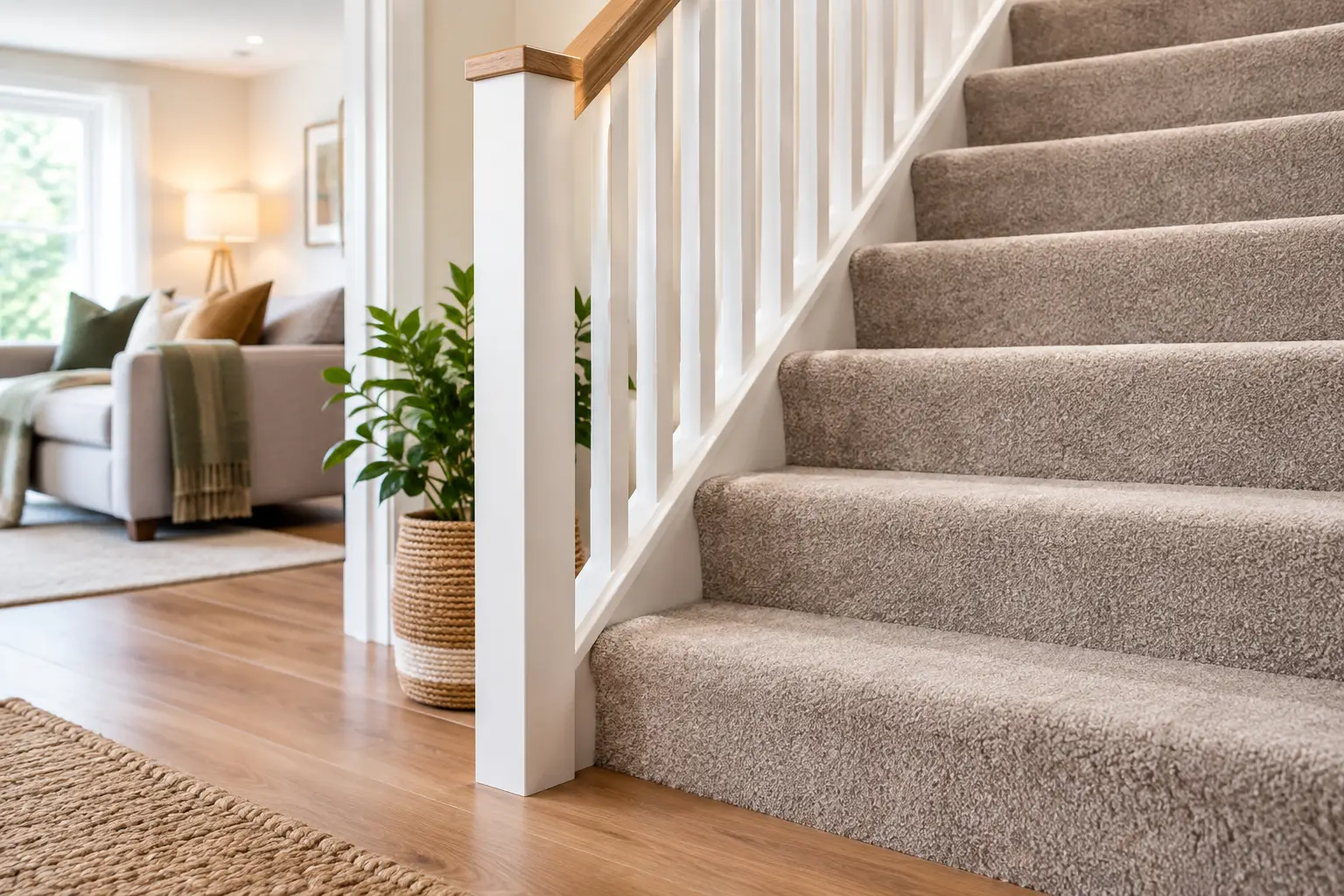
A staircase is one of the busiest routes in the house, yet it is often treated as an afterthought when flooring is chosen. This choosing stair carpet guide starts where the decision really happens: with how your household uses the stairs. A soft, pale carpet might look lovely in a quiet bedroom, but a family staircase needs to cope with shoes, pets, bags and the daily rush out of the door - while still making the hallway feel welcoming.
The right choice brings warmth underfoot, softens noise between floors and gives better grip than a hard stair surface. The wrong one can show traffic marks quickly, flatten on the step edges or make a narrow hall feel darker than it needs to. The good news is that you do not need to learn a new language of flooring to get it right.
Start with real life, not a showroom display
Before choosing a colour or texture, think about the route your staircase serves. Is it the main way from the front door to bedrooms? Do children run up and down it after school? Is there a dog that uses the stairs several times a day? These details matter more than chasing a particular look.
For a busy family home, durability and easy care should lead the decision. For a quieter household, you may have more freedom to choose a softer feel or a lighter shade. Landlords may favour a practical neutral that appeals to a range of tenants and stands up well between lets. There is no single best stair carpet - only the best fit for your home.
It is also worth looking at the landing and hallway as part of the same picture. Stairs rarely sit alone. A carpet that looks warm and balanced against your wall colour, furniture and natural light will feel far more considered than one picked under bright showroom lighting.
Choose a pile that can handle the steps
The pile is the surface you see and feel. On stairs, it has a harder job than it does in most rooms because every foot lands in a similar place. A carpet needs to recover well after pressure and retain its appearance along the front edge of each tread.
Twist carpet for everyday practicality
Twist carpet is a popular choice for staircases because its tightly twisted fibres create a neat, resilient finish. It suits busy homes particularly well, as the textured surface is more forgiving of everyday footprints and light marks than a very smooth, plain pile. It can feel cosy without looking overly formal, and there are plenty of shades to suit traditional or modern interiors.
A good-quality twist is often the sensible middle ground: comfortable, hard-wearing and easy to live with. If your priority is a staircase that will still look tidy after years of family life, it is well worth seeing twist samples at home.
Saxony carpet for a softer look
Saxony has a deeper, plusher feel, making it a tempting option if you want the stairs to feel especially luxurious. However, its smoother surface can show shading, footprints and vacuum lines more readily. That is not a fault - it is simply part of the character of the pile.
Saxony can work beautifully on a lower-traffic staircase or in homes where that soft, elegant finish is the priority. Choose a quality range and consider a mid-tone or flecked colour to make everyday signs of use less obvious.
Loop and natural styles need careful consideration
Loop carpets bring texture and a more tailored appearance, while natural fibre options offer distinctive character. Both can look fantastic, especially in period properties or homes with a more relaxed, textured scheme. On stairs, though, they need a careful conversation about household use.
A loop surface can be less suitable where pets may catch claws in the pile, and natural materials can need more specialist care than a practical man-made alternative. If appearance is your main focus, these may still be right for you. Just make sure the decision reflects how the stairs are actually used, not only how they will look on fitting day.
Colour and pattern can do more than decorate
Pale cream stairs can make a hallway feel bright, but they can also show marks from muddy shoes sooner. Very dark plain carpet can look smart, yet lint, dust and lighter pet hair may become more noticeable. For many Norfolk households, the sweet spot is a mid-tone shade: warm grey, taupe, oatmeal, soft brown or a muted blue-grey.
Flecked, heathered and lightly patterned carpets are especially useful on stairs. Their mix of tones helps disguise the small signs of a busy home without making the space feel fussy. They also offer a gentler transition between painted walls, woodwork and other flooring nearby.
A striped design can create a striking staircase and visually draw the eye upwards. It needs accurate planning and fitting so the lines sit straight on each tread, but the result can be worth it. On a narrow staircase, a subtle stripe can add interest without taking over the whole hall.
Bring samples into the actual space before deciding. Daylight from a glazed front door, a north-facing window or warm evening lamps can change a colour far more than people expect. Seeing several options beside your paint, bannister and landing flooring removes much of the guesswork.
Do not overlook underlay and stair safety
Underlay sits beneath the carpet, but it has a visible effect on how your stairs feel and perform. A suitable underlay gives a little comfort, supports the carpet and can help reduce sound travelling between floors. It should not be chosen purely on the basis of softness, though.
Stairs need an underlay that is appropriate for a fitted carpet installation and does not make the surface feel unstable underfoot. The carpet must also be secured correctly around every tread and riser. Professional fitting matters here: tidy edges and firm fixing are about safety as well as appearance.
If anyone in the household has reduced mobility, young children or concerns about slipping, say so when discussing options. A practical pile, well-fitted carpet and a handrail in good condition can make everyday movement around the house feel more reassuring.
Measure the staircase as a complete project
Staircases are not measured like a rectangular bedroom. Each tread, riser, turn, winding step, landing and doorway affects the amount of carpet needed. Pattern repeat and the direction of the pile can also influence the final calculation.
That is why a proper home measure is valuable. It helps avoid ordering too little material, unexpected joins or a design that does not line up as intended. It is also the best time to discuss whether the landing should match exactly, complement the stair carpet or transition into a different floor covering.
At Cosy Carpets & Flooring, the home visit approach means you can compare physical samples where they will actually be fitted, then receive a clear quotation for the full job. It is a simpler way to make a decision that depends so much on the character of your own hallway.
Think beyond the first week
A staircase carpet should still suit your home after the novelty of a new colour has worn off. Ask how it will cope with vacuuming, spot cleaning and the particular messes that happen in your household. A busy entrance hall may call for a more forgiving shade than an upstairs-only staircase, even if both areas are visible from the same space.
It is sensible to keep a small offcut after fitting where possible. It can be useful for checking cleaning products or dealing with a future repair. Regular vacuuming, prompt attention to spills and avoiding harsh treatments that are not suitable for the fibre will help the carpet keep its finish for longer.
The best staircase is not necessarily the palest, plushest or most expensive one. It is the one that feels right underfoot, works with your home and makes the daily trip upstairs a little quieter and cosier. Arrange to see samples in your own light, ask the practical questions and give yourself the confidence to choose well.