Does LVT Need Underlay? A Straightforward Answer
Does LVT need underlay? Learn when click or glue-down LVT needs it, what Norfolk subfloors need first, and how to avoid costly fitting mistakes at home.
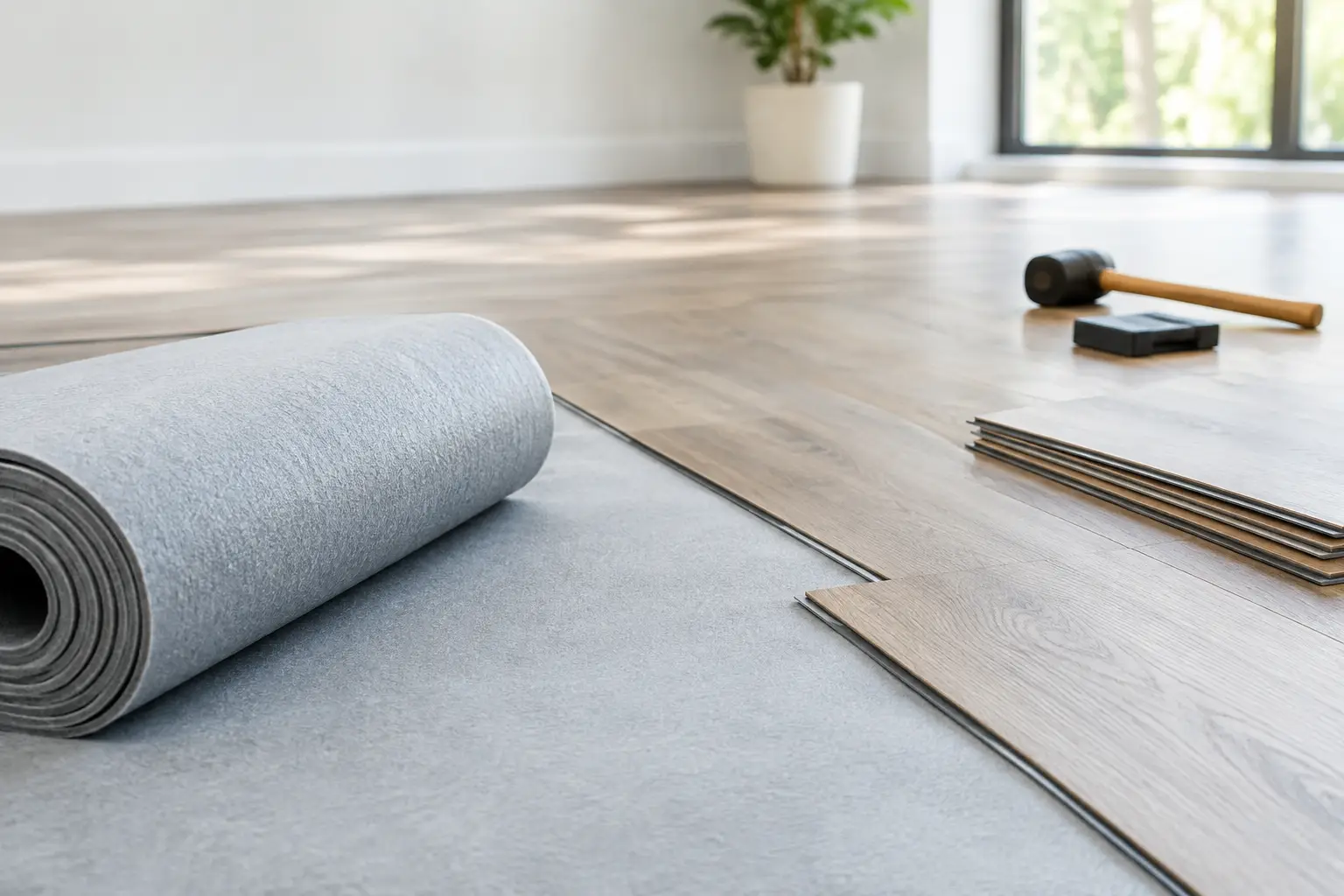
A new LVT floor can transform a kitchen, hallway or living room, but the question of does LVT need underlay is not one with a one-size-fits-all answer. The right choice depends on the type of LVT, the floor underneath it and the manufacturer’s fitting instructions. Get those three things right and you will have a comfortable, good-looking floor that is built to last.
The short answer is this: glue-down LVT is normally fitted directly to a properly prepared subfloor, while click LVT may need a specific underlay unless it has one built in. The word “specific” matters. LVT is not the same as laminate, and using a thick or spongy underlay designed for another floor can cause expensive problems later.
Does LVT Need Underlay? It Depends on the LVT
Luxury vinyl tile comes in several fitting styles, and they behave differently once they are on the floor.
Glue-down LVT usually does not need underlay
Glue-down LVT planks and tiles are bonded directly to the prepared surface with adhesive. They need a smooth, sound and dry base so every plank is fully supported. A traditional foam underlay would create movement beneath the flooring and stop the adhesive doing its job properly.
That does not mean the floor can simply be stuck over whatever is there. The subfloor may need smoothing compound, repairs or moisture protection before installation. These preparation layers are not underlay. They are there to create a suitable surface for the LVT and are often the most important part of a long-lasting result.
Glue-down LVT is a popular choice for busy rooms because it feels firm underfoot, works well around fitted furniture and allows for detailed layouts. It can also be a sensible option where floor height is tight, such as beneath doors or next to an existing tiled area.
Click LVT may need a purpose-made underlay
Click LVT has a locking edge that lets the planks or tiles fit together as a floating floor. Some click ranges require a compatible LVT underlay, while others come with an attached backing and must not have anything added underneath. Always follow the instructions for the exact product you have chosen.
Where underlay is required, it is typically thin, dense and designed to support rigid vinyl flooring. It can help absorb minor imperfections, reduce sound transfer and add a little comfort. It should never feel cushiony. Too much softness allows the joints to flex every time someone walks across the room, which can lead to gaps, damaged click edges or a floor that feels unstable.
Why Ordinary Underlay Is Not Always the Answer
It is easy to assume that more padding means more comfort. With LVT, that approach can do more harm than good. LVT is a resilient floor covering, but its joints and adhesive systems still rely on a stable foundation.
Carpet underlay is far too soft for LVT. Many laminate underlays are also unsuitable because they are too thick or compress too much under weight. Even if the flooring looks fine on fitting day, problems can appear once chairs, appliances and everyday foot traffic put pressure on it.
A suitable LVT underlay should match the flooring manufacturer’s requirements for thickness, compression strength and, where needed, acoustic performance. If the room has underfloor heating, it must also be approved for use with that system and have the correct thermal rating. Choosing an underlay because it is cheap or readily available can be a false economy.
The Subfloor Matters More Than Most People Expect
Underlay cannot fix a poor subfloor. Before any LVT is fitted, the surface needs checking for flatness, dryness and stability. This is especially relevant in older Norfolk homes, where floor levels can vary from room to room and original boards may have movement.
On a concrete floor, moisture is the key concern. Concrete can look dry while still holding moisture that may affect adhesive or cause issues beneath a floating floor. A moisture test helps establish whether a damp-proof membrane or another form of preparation is needed. This is a separate decision from whether underlay is required.
On timber floorboards, movement and gaps need attention first. Depending on the condition of the floor, a suitable plywood or smoothing system may be used to create a stable, even base. Fitting LVT straight over uneven or loose boards risks telegraphing lines and imperfections through the finished surface.
Existing vinyl, tiles or other hard flooring can sometimes be used as a base, but only if it is firmly fixed, level and in good condition. Loose tiles, deep grout lines and uneven joins need dealing with before the new LVT goes down. A professional assessment saves the frustration of discovering these issues halfway through a project.
Underlay, Smoothing Compound and Damp Protection Are Different Jobs
These terms often get bundled together, yet each solves a different problem.
Underlay sits beneath certain floating click LVT floors to provide the support or acoustic benefit specified by the manufacturer. Smoothing compound is applied to level small dips, joins and surface texture so the LVT has a clean base. A damp-proof membrane helps manage moisture rising through a concrete subfloor.
You may need one of these, two of them, or none at all beyond standard preparation. For example, a click LVT floor in an upstairs bedroom may need only the recommended thin underlay over a suitable base. A glue-down LVT kitchen on concrete might need moisture management and smoothing compound, but no underlay whatsoever.
That is why a quote based only on room measurements can miss the bigger picture. Looking at the actual floor in your home gives a clearer answer and helps prevent unwelcome extras later.
What About Sound and Warmth?
If reducing noise is your main concern, click LVT with an approved acoustic underlay can help reduce the sound of footsteps travelling into the room below. The difference depends on the construction of the building, the existing floor and the product chosen, so it is best to have realistic expectations. Underlay can improve things, but it cannot make an upstairs timber floor completely silent.
For warmth, LVT already feels less cold underfoot than ceramic tile or stone. An approved underlay may add a little insulation with click LVT, but it should not be chosen solely for that reason. If you have underfloor heating, an overly insulating layer can reduce how effectively the heat reaches the room. The flooring, underlay and heating system must all be compatible.
A Quick Way to Work Out What Your Room Needs
Start with the LVT style. If it is glue-down, plan for thorough subfloor preparation rather than underlay. If it is click LVT, check whether the manufacturer requires, permits or prohibits additional underlay.
Next, consider the base floor. Is it concrete, timber, an existing hard floor or a newly levelled surface? Is it flat, dry and secure? Finally, think about the room itself: a hallway with regular traffic, a kitchen with appliances, an upstairs bedroom and a conservatory can all place different demands on the installation.
This is where seeing physical samples and discussing the floor in the room pays off. The same oak-effect plank can look completely different in a bright south-facing kitchen than it does in a shaded hallway, and the fitting method may change too. At Cosy Carpets & Flooring, a home visit means the floor beneath your feet can be assessed alongside the colour, finish and layout you like.
When Professional Fitting Is Worth It
LVT gives a beautifully neat finish when it is fitted well, but the preparation is not the place to cut corners. Straight cuts, clean joins and carefully planned thresholds are visible details. Moisture checks, levelling and choosing the correct underlay are the less visible work that protects the result.
Professional fitting is particularly worthwhile when you are moving between rooms, fitting around kitchen units, working with an older subfloor or installing LVT over underfloor heating. It also gives you a clear route if the floor needs more preparation than first expected, rather than trying to make an unsuitable underlay solve the problem.
The best starting point is not to buy underlay first. Choose the LVT you love, have the subfloor checked, then use exactly the preparation and materials that flooring calls for. It is a simple way to keep your new floor looking cosy, secure and ready for everyday life.