Hallway LVT Renovation for Busy Norfolk Homes
Plan a hallway LVT renovation with practical ideas on colour, layout, preparation and fitting, so your Norfolk entrance looks good and works hard daily.
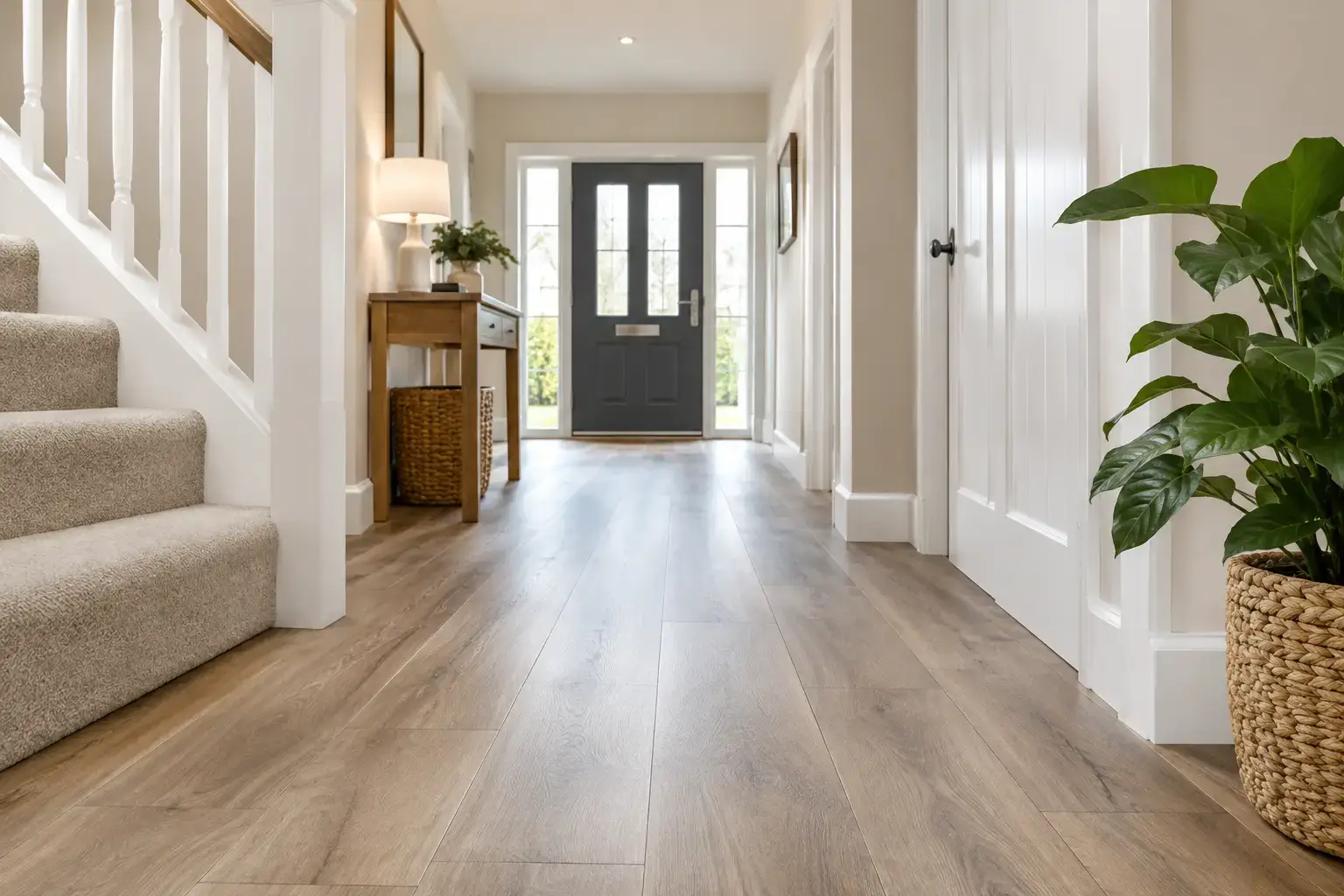
Your hallway takes more daily wear than almost any other part of the house. Shoes, school bags, pram wheels, muddy paws and the constant in-and-out of family life soon show on tired flooring. A hallway LVT renovation is a smart way to give this hard-working space a fresh look without choosing something precious or difficult to live with.
LVT, short for luxury vinyl tile, gives you the appearance of wood or stone with a warmer, quieter feel underfoot than many hard floors. It is a practical choice for Norfolk homes where an entrance needs to look welcoming on Monday morning and still cope when everyone piles through the door after a wet weekend walk.
Start your hallway LVT renovation with how you live
Before choosing a colour or pattern, think about what actually happens in your hallway. Is it a narrow entrance connecting several rooms? A bright porch that leads straight into the kitchen? Or a busy family space where coats, shoes and everyday clutter naturally gather?
This matters because the best flooring is not always the lightest, trendiest or most dramatic sample. A very pale wood effect can make a small hallway feel open, but it may show scuffs more readily in a high-traffic home. A deep charcoal stone effect can look striking, although it can make a dark entrance feel more enclosed if there is little natural light.
For most homes, a mid-tone LVT is the comfortable middle ground. Natural oak shades, warm greys and gentle stone colours disguise everyday marks better than very light or very dark finishes, while still giving the room a clean, considered feel. Bring samples into the hallway itself before making the call. The light at your front door, wall colour and adjoining rooms can change a flooring choice far more than a showroom display ever could.
Choose a style that suits the space
Wood-effect LVT is often the natural fit for a hallway because it brings warmth without the maintenance worries of real wood. Long planks can make a compact entrance feel longer or wider, depending on the direction they are laid. Running planks along the length of a narrow hall usually draws the eye forward, while laying them across the width can help a long corridor-style space feel less tunnel-like.
Stone-effect LVT is a strong alternative for homes with a more contemporary look, or for an entrance that opens into a utility, kitchen or cloakroom. It creates a neat, grounded finish and works particularly well with painted panelling, neutral walls and simple storage. Tile formats can also help define an entrance area in an open-plan home.
Pattern is worth considering, but it needs the right setting. Herringbone LVT brings character and can make a hallway feel more premium, especially in a period property. The trade-off is that a detailed layout creates more visual movement, so it may not be the best choice for a very small, busy entrance already filled with doors and furniture. Straight plank or tile designs tend to feel calmer and are easier to coordinate with the rest of the house.
Think beyond the floor colour
A successful hallway LVT renovation should connect the entrance to nearby rooms rather than make it feel separate by accident. If your living room has warm timber furniture, an oak-effect LVT with honey or natural undertones can make the transition feel easy. If your kitchen has cool grey cabinets, a soft grey stone or weathered wood design may sit more comfortably.
Pay attention to undertones rather than relying on names such as “grey” or “oak”. Some greys lean blue, while others are warmer and slightly beige. Some wood effects have golden tones, while others are smoked, pale or rustic. This is exactly why viewing physical samples at home is so useful. You can place them beside skirting boards, doors and paintwork, then see how they look in daylight and under your usual evening lighting.
It is also worth checking the flooring from the front door looking in. That first view sets the tone for the home, and a hallway should feel welcoming rather than overly busy. A floor does not need to shout to make an impact.
Preparation is where a good finish begins
The visible part of an LVT floor is only as good as the surface beneath it. Hallways often have older subfloors, uneven areas near thresholds or floorboards that have moved over time. If these issues are not addressed, they can show through or affect how the finished floor feels underfoot.
Professional fitting starts with measuring properly and assessing the existing floor. Depending on the condition of the subfloor, preparation may involve smoothing compounds, levelling work or securing loose boards. This is not the glamorous part of a renovation, but it is the part that helps your new floor sit flat, feel solid and look good for years to come.
Door clearances need checking too. A new floor can alter the height at thresholds, and internal doors may need a small adjustment to open freely. It is much easier to plan this before fitting day than to discover it afterwards.
Moisture also deserves attention, particularly in older properties or ground-floor hallways. LVT is a practical surface for an entrance, but the subfloor beneath still needs to be suitable. A fitter can identify concerns early and recommend the right preparation rather than simply laying over a problem.
Fitted LVT or click LVT: which is right for a hallway?
There is no one-size-fits-all answer. Glue-down LVT is fixed directly to a prepared subfloor and is often ideal for hallways with plenty of foot traffic. It gives a secure, close-fitting finish and works well for detailed patterns, awkward shapes and busy routes through the home. The preparation needs to be right, so it is usually a job best handled by experienced fitters.
Click LVT uses interlocking planks or tiles and can be a good option where the existing floor is suitable and you want a floating-floor installation. It is generally thicker underfoot and can offer a pleasingly solid feel. However, entrance areas with uneven subfloors or complicated doorways may still need careful preparation.
The right choice depends on your subfloor, budget, the style you want and how the hallway connects to other rooms. A free home measure takes the guesswork out of it. You get advice based on your actual floor, not a generic answer from a shelf label.
Plan for thresholds, trims and the little details
The small finishing touches make a huge difference in a hallway. Door bars and thresholds should look tidy while allowing a practical transition into adjoining rooms. If you are replacing flooring in more than one space, matching or coordinating the LVT across the hall, kitchen and utility can create a more spacious, joined-up feel.
Skirting boards are another consideration. In some renovations, flooring is fitted neatly up to existing skirting. In others, homeowners choose to refresh the skirting at the same time for a cleaner overall result. Neither approach is automatically better - it depends on the condition of the existing finish, the amount of decorating planned and the look you prefer.
Think about the doorway too. A slightly different laying direction, a carefully placed plank or a centred tile can make an entrance feel intentional. These details are easy to overlook when choosing samples, yet they are what turn a good floor into a properly finished room.
Set a realistic budget for your new hallway floor
LVT prices vary according to the range, format and installation requirements. At Cosy Carpets & Flooring, LVT starts from £29.99 per square metre, but the full cost of a hallway project will depend on the area, subfloor preparation, fitting method and finishing details.
A clear quote should make those elements easy to understand. Be wary of comparing flooring prices alone if one option excludes preparation or fitting. A low-cost product can become a false economy when the floor beneath needs attention, while a well-prepared LVT installation is designed to handle the everyday pressure your hallway receives.
For landlords, choosing a durable, neutral LVT can be particularly sensible. It gives a property a smart, easy-to-care-for entrance and tends to appeal to a wide range of tenants. For homeowners, spending a little more on the finish you genuinely enjoy seeing every day can be worthwhile, especially in a space you pass through dozens of times a week.
Make choosing easier with samples at home
A hallway is one of the hardest places to judge from a photograph. It often has changing light, narrow sightlines and several competing finishes nearby. Seeing LVT samples in your own home lets you compare colours against your walls and doors, check how they look at different times of day and choose without showroom pressure.
Measure the practical details, choose a few styles you genuinely like, then narrow them down in the space where they will live. That is a much cosier way to make a decision - and it gives you confidence that the floor will work for real life, not just look good in a display.
A hallway should welcome you home, cope with the daily rush and make the rest of the house feel more put together. Choose an LVT finish that suits your light, your lifestyle and your home, then let careful preparation and professional fitting do the hard work.