Glue Down Versus Click LVT: Which Is Best?
Choosing glue down versus click LVT? Compare comfort, stability, preparation and fitting to choose the right luxury vinyl floor for your Norfolk home.
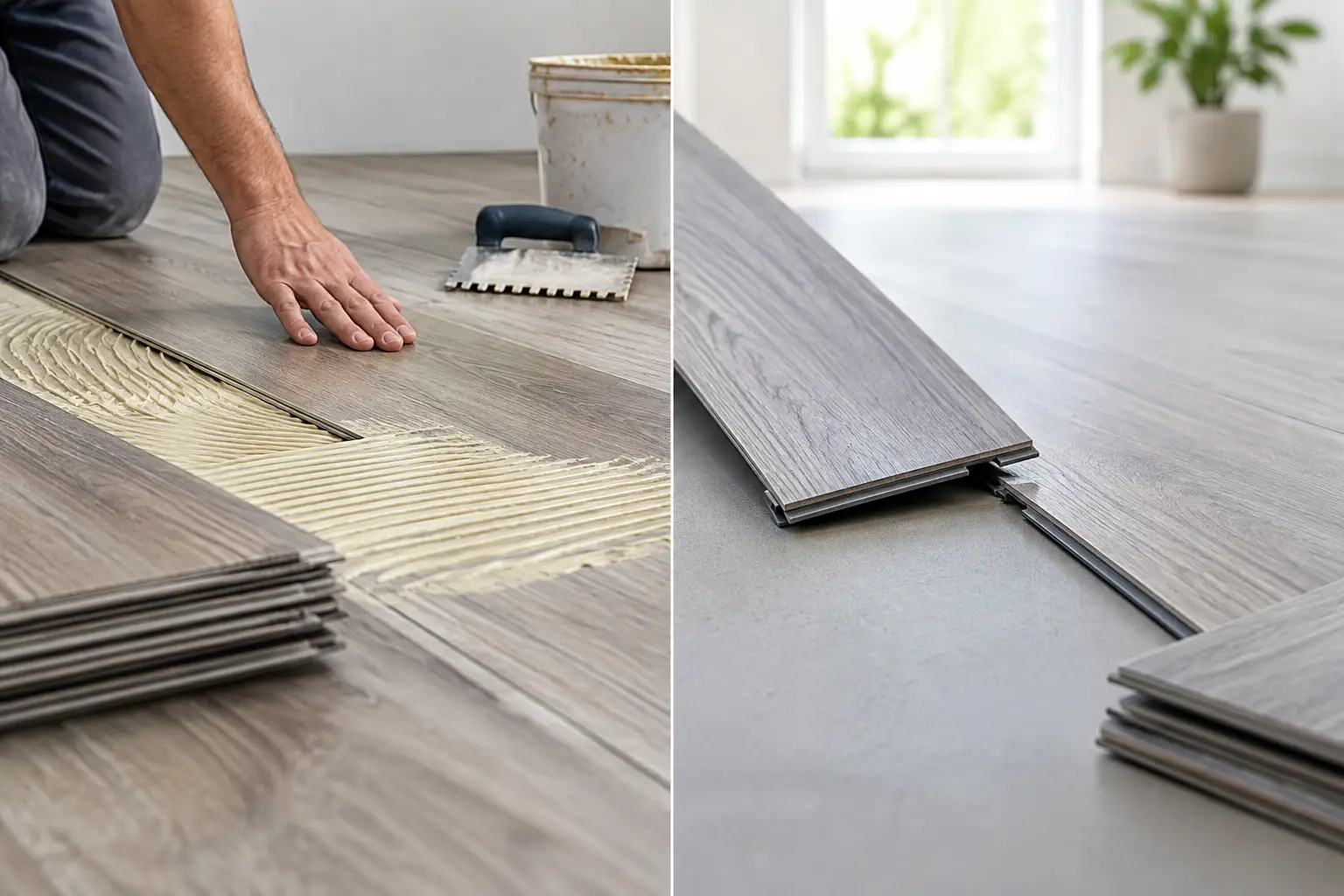
A beautiful LVT floor should do more than look the part on a small sample. It needs to feel right underfoot, cope with daily life and suit the room it is going into. When comparing glue down versus click LVT, the best choice is not always the one with the biggest selling point. It is the one that works with your subfloor, your household and the finish you want to enjoy for years.
Both types offer the realistic wood and stone looks that make luxury vinyl tile such a popular choice for Norfolk homes. Both are practical, easy to live with and available in a huge range of colours and plank or tile designs. The key difference is how they are fitted - and that affects everything from floor preparation to the way the room feels when you walk across it.
Glue down versus click LVT: the main difference
Glue down LVT is fitted directly to a prepared subfloor with adhesive. Each individual plank or tile is fixed in place, creating a close, firm finish. Click LVT, sometimes called rigid-core or floating LVT, uses interlocking edges. The boards click together and sit over a suitable underlay or built-in backing rather than being bonded to the floor beneath.
Neither is automatically better. Glue down is often the more refined choice where a perfectly flat, long-lasting finish is the priority. Click LVT can be a great option when installation speed, a little more warmth underfoot or a less permanent fitting method appeals.
The detail that catches many people out is the condition of the subfloor. A new floor covering can only look as good as the surface below it. Bringing samples and discussing the room in your own home makes this much easier to judge than trying to make the decision under showroom lighting.
Why homeowners choose glue down LVT
Glue down LVT is the traditional fitted LVT option, and there is a reason it remains so popular. Because it is secured across the floor, it has a very stable, solid feel. There is little movement underfoot, and the finished height is usually lower than a click system. That can be especially useful around doorways, kitchen units and transitions into adjoining rooms.
It is also a strong choice for larger open spaces and busy areas such as hallways, kitchens and living rooms. A properly prepared and professionally fitted glue down floor can handle regular family traffic well, including pets, chairs being moved and the general comings and goings of a busy home.
Glue down LVT gives plenty of creative freedom, too. Herringbone patterns, borders, contrasting feature strips and intricate tile layouts are all easier to achieve with individual planks and tiles. If you have fallen for a particular layout rather than simply a particular colour, this can make a real difference.
There are trade-offs. The subfloor needs careful preparation, often including smoothing compound, because glue down LVT follows the surface beneath it closely. Small dips, ridges or uneven patches can show through over time if they are not corrected first. The room also needs to be clear and ready while the adhesive is applied and the floor is fitted.
For homeowners planning to stay put and wanting a close-to-the-floor, tailored finish, that extra preparation is usually worthwhile.
When click LVT makes more sense
Click LVT is popular because it is straightforward in concept and comfortable in everyday use. Its rigid construction can help bridge very minor imperfections in an existing floor, although it is not a shortcut for major unevenness. The interlocking system creates a floating floor, which means it can usually be installed without adhesive across the main floor area.
Many people like the slightly softer, warmer feel of click LVT. Depending on the product and the underlay or integrated backing, it can also reduce the hollow sound sometimes associated with hard flooring. It is a sensible option for bedrooms, lounges and less demanding spaces where comfort is high on the list.
Click LVT may also be helpful where a floor could need to be lifted in future, such as a property where access to the subfloor is a consideration. Individual boards are not glued down, though lifting and reusing them still needs care to avoid damaging the click joints.
The compromise is that click LVT is typically thicker. This can mean doors need adjusting or threshold details need more attention. Like any floating floor, it also requires an expansion gap around the edge of the room. That gap is covered with suitable finishing trims or skirting, but it needs to be allowed for during planning.
In very large areas, rooms with lots of heavy fitted furniture, or spaces that receive strong sunlight and temperature changes, glue down LVT can offer greater peace of mind. Your fitter will assess this rather than treating click LVT as a one-size-fits-all answer.
Think about the room, not just the sample
A pale oak click floor may look spot on with your sofa, while a slate-effect glue down tile could transform a kitchen. But appearance is only the starting point. Ask how the room is used on an ordinary Tuesday morning, not just how you want it to look when it is freshly fitted.
For a kitchen, both formats can work well, provided the subfloor and product are suitable. Glue down often suits homes where appliances, dining chairs and frequent footfall create a hard-working environment. Click LVT can still be a good choice where its added comfort and quicker fitting approach are more valuable.
For hallways, stability and durability tend to lead the decision. Glue down LVT is often favoured here because it stays firmly in place through repeated trips in and out. In bedrooms and quieter living spaces, click LVT’s softer feel may win out.
For landlords, the choice may come down to the existing floor, the likely level of wear and how quickly the property needs to be ready. A professional survey helps avoid paying for a product that is unsuitable for the condition of the subfloor.
Underfloor heating, moisture and preparation
Both glue down and click LVT can work with compatible underfloor heating systems, but the manufacturer’s guidance must be followed. Heat needs to be introduced gradually, and the floor surface temperature must stay within the stated limit. The type of heating, the screed condition and the moisture level all matter.
Moisture is another reason not to skip the measuring visit. A concrete subfloor may look dry but still hold moisture that affects adhesive or the floor over time. Proper testing and preparation are far less glamorous than choosing a plank design, but they protect the investment you are making.
This is where professional fitting earns its place. The right adhesive, smoothing product, expansion allowance and finishing detail depend on the room itself. A good fitter will explain what needs doing and why, without turning it into a jargon-heavy sales pitch.
Cost: look beyond the price per square metre
Click LVT and glue down LVT can vary widely in price depending on the range, wear layer, design and installation requirements. It is tempting to compare only the advertised cost per square metre, but preparation and fitting are a genuine part of the final budget.
Glue down LVT can involve more subfloor work and labour, particularly with herringbone or detailed layouts. Click LVT may be quicker to install, but it can need underlay, trims and adjustments around doors. A clear quotation should set out what is included, so there are no awkward surprises after you have chosen your flooring.
At Cosy Carpets & Flooring, seeing real samples against your walls, cupboards and natural light makes this decision much less of a guessing game. It also gives you the chance to talk through the condition of the existing floor before committing to a style.
So, which LVT should you choose?
Choose glue down LVT if you want a low-profile, firmly bonded floor, have a busy area to cover or love the look of herringbone and detailed layouts. Be prepared for careful subfloor preparation, because that is what delivers the smart, lasting result.
Choose click LVT if comfort, a floating installation and a practical solution for a suitable existing floor matter most. It can be an excellent fit for bedrooms and living areas, but it still needs professional planning around levels, edges and room size.
The most useful next step is to look at samples where the floor will actually live. Notice the light at different times of day, compare finishes with your furniture, and let the condition of the room guide the decision. That is how you choose a floor that feels cosy from the first step, not just good on paper.